

According to the U.S. Census Bureau of Labor Statistics, approximately 25% of people between the ages of 65 and 74 years are working. That’s one out of every four individuals at the age of receiving full Social Security benefits, and the number of individuals is only expected to increase.
It seems that the dream of leisure and free time is becoming a thing of the past. What’s going on here? Is it financial stress? Longevity? A personal choice?
Maybe all of the above. There are many factors that contribute to older individuals continuing to work into their retirement years. Some do so out of necessity, determining that they need extra money to make ends meet or fund their hobbies. Others work as a strategy to delay withdrawing from social security or other retirement accounts for as long as possible. Knowing I am expected to live much longer than my forebears means that I’ll need more financial support to carry me. No matter how old a person is, money makes the world go ’round!
There are some older individuals who continue to work by choice and not because of money. These people actually seem to like their jobs. According to the Psychology of Work as published by David Blustein, PhD, work helps us to meet many important psychological needs. It is a means of structuring our day. Clocking in and clocking out throughout the workweek can provide us with predictability. Many people with too much unstructured time begin to feel like they are stagnating. The internal clock within each of us likes routine, and this can easily disappear when we leave the workforce.
As well, going to work gives us the opportunity to interact with others. Social time can take the form of assisting customers, talking to coworkers, and catching up with the boss. Because we are already going to work anyway, the opportunity to socialize is already built in; we don’t have to seek it out or go looking for it. When we withdraw from the workforce completely, we often don’t have such ready or simple means of meeting this important need.
Finally, working to make a living is a source of pride and accomplishment. Whether a person loves or hates their job, it still provides them with the means of supporting their families. We pay our rent, purchase food, and buy goods and experiences because we work. Doctors and custodial staff, lawyers and plumbers, retail salespersons and airline pilots: it doesn’t matter what the profession is. All paying jobs give us the satisfaction of buying what we need and what our families need to survive. Homemakers, too, can know that they are making an important contribution to the family. What an important role to have, one that becomes part of our identity and that can be lost once we step away from the job.
As can be seen, stepping away from work does not just mean the loss of a paycheck; it can also mean a loss of structure, social interaction, and personal accomplishment. Some retirees volunteer to help meet these needs in a different way. Others choose to continue working.
The good news is that working into one’s retirement years does not have to mean full-time work. Retirement often means having more free time and less obligation to work. Many retirees steps down from a full-time job and take on part-time work to help stay engaged and make extra money. While a person may choose to remain within their current job, there also is the opportunity to work in a new industry. Is there anything that you’ve always wanted to try but have never had the chance? Maybe teaching or art or cooking? Consider finding your passion through a new part-time job, and you just might get the best of both worlds: work and retirement.
Additionally, continuing to work at a manageable, low-stress job can lead to better health and a longer life expectancy. If the trend points to more working in older age, then it makes sense to find the silver lining in the cloud.
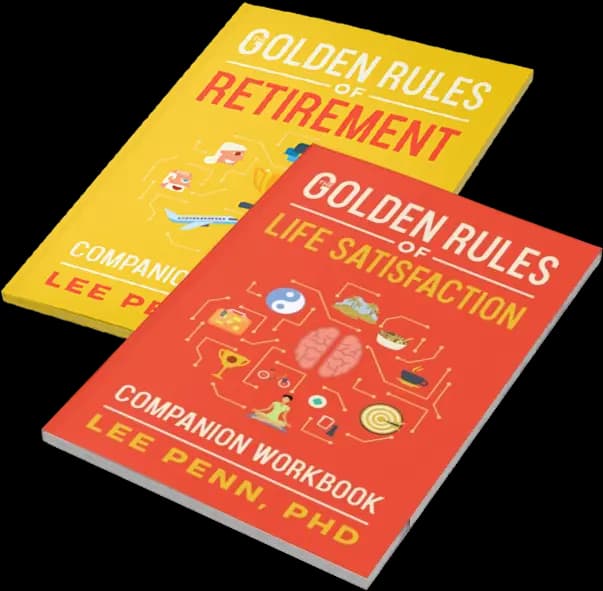
If you’re interested in exploring these ideas more, check out my new book available on October 11, 2023: The Golden Rules of Retirement: A Psychologist’s Guide To Living Life to the Fullest, No Matter Your Financial Situation. Reserve your copy now on Amazon.com by going to the following link: https://www.amazon.com/Golden-Rules-Retirement
And, stay tuned for details, including release date, launch sales, and future books in the Golden Rules series by visiting my website: lifecanbegolden.com/
-Lee Penn, PhD
Blustein, D. L. (2006). The psychology of working: A new perspective for career development, counseling, and public policy. Lawrence Erlbaum Associates Publishers.
Check Out the Blog!




Join the E-mail list!
"Yes, I want to receive the free digital companion workbooks in my email, as well as news about upcoming books, book deals, and blog posts for the Golden Rules Series." Enter your email below to sign up and make life a little more golden today.

©2023-2026 Lee Penn, PhD. All Rights Reserved.